Where is your jurisdiction at? Net zero, single-use plastics and container deposit schemes
Tying it all together
Over the past few years we’ve published a fair bit on Australia’s climate and waste commitments – national emission targets, emission targets by state, reducing single-use plastics and container deposit schemes. Individually, each tells part of the story. Together, they paint a picture of a country slowly (and unevenly) reshaping how it generates energy, what it sells over the counter, and what happens to a drink container once it’s empty.
So, this is a “where are we at” piece. The idea is simple: pick your jurisdiction and see where it stands on the three big consumer-facing fronts – reaching net zero, phasing out single-use plastics, and running a container deposit scheme. We’ve also flagged, where relevant, how you can play a part.
A couple of things worth knowing before you jump to your state or territory. First, every Australian jurisdiction now has a net zero target of some kind, and as of May 2025, every jurisdiction has a container deposit scheme up and running – Tasmania was the last to join. Second, the detail varies enormously. What’s banned in Adelaide may still be perfectly legal in Sydney, and what earns you 10 cents in Hobart might still be heading to your kerbside bin in Melbourne.
For the national picture, it’s worth a quick word on the Commonwealth before we get into the jurisdictions.
The national backdrop
The Australian Government legislated its core climate targets in the Climate Change Act 2022: a 43% cut in emissions below 2005 levels by 2030, and net zero by 2050. In September 2025 it submitted an updated commitment to the United Nations under the Paris Agreement, setting a 2035 target of a 62-70% reduction below 2005 levels. The supporting machinery includes the Powering Australia plan, the reformed Safeguard Mechanism (which requires Australia’s largest industrial emitters to reduce their emissions over time), and significant investment in transmission and renewables.
On plastics and packaging, the Commonwealth’s role is largely about coordination rather than over-the-counter bans – those are set by the states and territories. The National Plastics Plan and national waste export bans set the broad direction, while environment ministers continue to work towards more consistent rules across borders. There is no national container deposit scheme; instead, the schemes are run jurisdiction by jurisdiction, all harmonised at a 10-cent refund.
With that backdrop set, here’s where each jurisdiction is at. Jump straight to your state or territory:
- Australian Capital Territory
- New South Wales
- Northern Territory
- Queensland
- South Australia
- Tasmania
- Victoria
- Western Australia
- Snapshot
- How you can contribute
Australian Capital Territory
Reaching net zero
The ACT has one of the most ambitious targets in the country: net zero by 2045, with progressive cuts of 50–60% by 2025, 65–75% by 2030 and 90–95% by 2040 (all measured against 1990 levels). These are legislated under the Climate Change and Greenhouse Gas Reduction Act 2010.
The Territory has run on 100% renewable electricity since 2020, secured through large-scale renewable energy contracts. New suburbs are being built gas-free, the government is electrifying homes and buildings, and the Transport Canberra bus fleet is transitioning to zero emissions. The ACT has acknowledged it is developing a refreshed climate change strategy as it works towards these goals. You can read more on the ACT’s climate change FAQs.
Reducing single-use plastics
The ACT was one of the first jurisdictions to legislate single-use plastic bans. Plastic cutlery, drink stirrers, expanded polystyrene takeaway containers and (with exemptions) straws went first in 2021, followed by plastic plates and bowls, polystyrene loose-fill packaging and plastic-stemmed cotton buds in 2023. Heavyweight and “boutique” plastic bags over 35 microns were added in early 2024. Exemptions apply for people who need plastic straws for medical or accessibility reasons, and for certain medical, scientific and forensic uses. The Territory has consulted on further phase-outs as it works through its next steps.
Container deposit scheme
The ACT’s container deposit scheme launched in 2018 and pays 10 cents for eligible drink containers between 150 mL and 3 L – cans, glass and plastic bottles, and juice and flavoured-milk cartons. Wine and spirit bottles, cordial concentrates and plain milk are currently excluded, though the Territory has announced plans to expand the range of eligible containers in 2027. You can drop containers at depots, reverse vending machines and donation points across Canberra.
New South Wales
Reaching net zero
NSW has legislated its targets under the Climate Change (Net Zero Future) Act 2023: a 50% cut by 2030, 70% by 2035, and net zero by 2050. The Act also created an independent Net Zero Commission to keep the government accountable.
The centrepiece of the state’s effort is its Electricity Infrastructure Roadmap, which is building renewable energy zones to replace retiring coal-fired power stations, alongside programs targeting industry, electric vehicles and hydrogen. NSW recently reported it was tracking only a few percentage points short of its 2030 target, with a new sector-by-sector Net Zero Plan in development. For the bigger picture, the government’s climate action overview is a useful starting point.
Reducing single-use plastics
NSW began banning single-use plastics in 2022: lightweight plastic bags first, followed by straws, stirrers, cutlery, plates, bowls, cotton buds and expanded polystyrene cups and food containers. From January 2025, plastic items integrated into packaging were also banned. The same exemptions apply for straws where there’s a medical or accessibility need. The NSW EPA’s plastics FAQs cover what’s in and what’s out, and the state has signalled a further round of measures (as part of the NSW Plastics Plan 2.0) targeting problematic plastics and chemicals over the coming years.
Container deposit scheme
NSW’s scheme, Return and Earn, has been running since 2017 and is one of the largest in the country, with hundreds of return points statewide. It pays 10 cents for most drink containers between 150 mL and 3 L. Plain milk, wine, spirits and a handful of other products are currently excluded, though NSW has indicated it will expand the scheme to include wine and spirit bottles by late 2027. Full details are on the NSW EPA’s Return and Earn page.

Northern Territory
Reaching net zero
The NT’s Climate Resilience Plan commits the Territory to net zero emissions by 2050, in step with the national target. Emissions are assessed under the Environment Protection Act 2019, and the Australian Government’s Safeguard Mechanism which requires large emitters to reduce emissions toward net zero. Where emissions can’t be avoided or mitigated, the residual emissions may need to be offset. The Greenhouse Gas Emissions Offsets Policy and Technical Guidelines are part of the Northern Territory Offsets Framework, which applies to environmental approvals under the Environment Protection Act 2019 and other prescribed legislation, with Australian Carbon Credit Units the preferred offset.
Reducing single-use plastics
The NT banned lightweight checkout bags back in 2011, but it has been slower than most to broaden its plastics rules. It has consulted on phasing out additional items – straws, stirrers, cutlery, plates, bowls and polystyrene food containers among them – and its circular economy strategy commits to tackling problematic single-use plastics, though broader regulations are still being developed. In the meantime, some local councils have led the way with their own restrictions.
Container deposit scheme
The NT’s CDS has run since 2012 and was one of the earliest in the country after South Australia. It pays 10 cents for most beverage containers up to 3 L, returned through collection depots. From mid-2026, the NT is expanding the scheme to take in wine and spirit bottles – and, unusually, plain milk containers, making it the only jurisdiction to do so. The NT EPA administers the scheme.
Queensland
Reaching net zero
Queensland legislated its targets in the Clean Economy Jobs Act 2024: a 30% cut by 2030, 75% by 2035, and net zero by 2050. The state has reported it is already exceeding its 2030 target well ahead of time, helped by a strong renewable energy build-out under targets of 50% renewables by 2030, 70% by 2032 and 80% by 2035.
Reducing single-use plastics
Queensland banned straws, stirrers, plates, bowls, cutlery and polystyrene takeaway containers from 2021, then added plastic-stemmed cotton buds, microbeads, polystyrene packing peanuts and the mass release of helium balloons from 2023. The exemption allowing a single-use plastic item attached to a pre-packaged item expired at the end of 2025. Exemptions apply for people who need straws for medical or accessibility reasons, among other things. The state’s single-use plastics ban page lays out the full list.
Container deposit scheme
Containers for Change has run in Queensland since 2018, paying 10 cents per eligible container. It stands out for being one of the first schemes in the country to accept glass wine and pure spirit bottles, added in late 2023, which is something most other jurisdictions are only now catching up on. The scheme has seen more than 8 billion containers returned at hundreds of refund points across the state. See the Queensland container refund page for locations and details.
South Australia
Reaching net zero
South Australia was the first state to legislate emission reduction targets, back in 2007. It has since strengthened them to at least a 60% reduction by 2030 and net zero by 2050, alongside a goal of 100% net renewable electricity by 2027. The state is already a renewable energy standout. South Australia generates more than 70% of its electricity from renewable sources, with projections to reach 85% by 2025/2026 and a target of 100% net renewable energy by 2027. Its greenhouse gas emissions reporting tracks the state’s progress.
Reducing single-use plastics
SA is the national leader on plastics. It was first to ban lightweight bags (in 2009) and first to legislate dedicated single-use plastics laws. Straws, cutlery and stirrers went in 2021; polystyrene cups, bowls and plates in 2022; and from September 2024, SA went further than any other state – banning single-use plastic beverage containers (including coffee cups) and single-use plastic food containers outright. Plastic produce bags, bread tags, balloon sticks and more were added at the same time, with plastic fruit stickers and soy sauce fish containers following in 2025. Certified compostable alternatives and medical or accessibility exemptions apply. The Replace the Waste campaign and the SA EPA detail the staged timeline.
Container deposit scheme
SA’s scheme is the original CDS operating since 1977, making it Australia’s first. It pays 10 cents per container and consistently achieves one of the highest return rates in the country. SA has announced an expansion, jointly with NSW, to take in wine and spirit bottles and a wider range of containers by late 2027. Full details, including what’s accepted, are on the SA EPA’s container deposit page.
Tasmania
Reaching net zero
Tasmania has the most distinctive position in the country: it has already achieved net zero, and has done so consistently since 2014, thanks to its extensive hydroelectric generation and large forest carbon sinks. Its legislated target, under the Climate Change (State Action) Act 2008 as amended, is net zero emissions – or lower – from 2030. The focus now is on sector-based emissions reduction plans and a renewable energy target of 200% by 2040.
Reducing single-use plastics
Tasmania banned lightweight plastic bags back in 2013, but until recently relied mainly on that and on local council by-laws. The state has been working to phase out a broader range of problematic single-use plastics – straws, stirrers, cups, takeaway containers and polystyrene packaging – through consultation and forthcoming legislation. The Department of Natural Resources and Environment Tasmania is leading this work.
Container deposit scheme
Tasmania’s scheme, Recycle Rewards, launched on 1 May 2025, making the state the final piece in the national puzzle and Australia the first continent fully covered by container deposit schemes. It pays 10 cents per eligible container, returned at depots and reverse vending machines across the state. The early results have been strong: the government reported the scheme hit one million containers within days of launch, and its first year saw well over a hundred million containers recycled.

Victoria
Reaching net zero
Victoria has legislated net zero by 2045, among the most ambitious timelines nationally, under its Climate Action Act 2017. Interim targets step the state down 45–50% by 2030 and 75–80% by 2035, building on the 2025 interim target of 28–33%, which Victoria has already exceeded. The state has locked in strong renewable energy and storage targets, including 95% renewable electricity by 2035 and substantial offshore wind ambitions, and has re-established the State Electricity Commission. Its emissions and targets page tracks progress.
Reducing single-use plastics
Victoria banned single-use plastic straws, cutlery, plates, drink stirrers, cotton bud sticks and expanded polystyrene food and drink containers from February 2023. Notably, the ban covers conventional, degradable and compostable plastics alike. Plastic-lined paper plates were added in late 2024, and from the start of 2026, single-use plastic items integrated into packaging by machine were also added. Exemptions cover straws for medical or accessibility needs and certain institutional settings. The Victorian EPA and the state’s plastics page detail what’s banned.
Container deposit scheme
CDS Vic launched in November 2023 and pays 10 cents for eligible drink containers between 150 mL and 3 L, with hundreds of refund points across three operating zones. Wine bottles, spirits and plain milk are currently excluded. You can return containers via reverse vending machines, depots and over-the-counter points, with refunds available as cash, vouchers, electronic payment or a donation.
Western Australia
Reaching net zero
WA has a long-standing commitment to net zero by 2050 and is legislating the framework to support it, having introduced climate change legislation that formalises the target and sets up requirements for interim targets. Its Sectoral Emissions Reduction Strategy maps out the path across the economy, with state-owned coal-fired generation set to be phased out by 2030. Of the larger states, WA has been among the slower movers on legislating interim targets, though the legislative gap is closing.
Reducing single-use plastics
WA’s Plan for Plastics is a two-stage program. Stage 1 (from 2022) covered plates, bowls, cups, cutlery, stirrers, straws, thick plastic bags and polystyrene food containers. Stage 2 (from 2025) broadened the net to barrier bags, cotton buds, polystyrene packaging, microbeads and coffee cups and lids with plastic linings. Accessibility and health exemptions apply. The fast-tracked plan was announced as one of the most comprehensive in the country at the time.
Container deposit scheme
Containers for Change has run in WA since 2020, paying 10 cents per eligible container. So far more than 5 billion containers have been collected and diverted from landfill. From 1 July 2026, the scheme expands to include wine and spirit bottles. Plain milk and registered health tonics remain excluded.
A snapshot of where each jurisdiction sits
| Jurisdiction | Net zero target | Single-use plastics | Container deposit scheme |
| ACT | 2045 (vs 1990) | Broad bans in force since 2021; bags over 35 microns added 2024 | ACT CDS since 2018; expansion planned 2027 |
| NSW | 2050 (vs 2005) | Broad bans since 2022; integrated packaging from late 2024 | Return and Earn since 2017; wine/spirits by late 2027 |
| NT | 2050 | Bag ban since 2011; broader phase-outs in development | NT’s CDS since 2012; wine, spirits and milk added mid-2026 |
| QLD | 2050 (vs 2005) | Bag ban since 2021; integrated packaging from end of 2025 | Containers for Change since 2018; already takes wine/spirits |
| SA | 2050 (vs 2005) | National leader; coffee cups and food containers banned 2024 | Australia’s first CDS, since 1977; expansion by late 2027 |
| TAS | Net zero from 2030 (already achieved) | Bag ban since 2013; broader phase-outs in progress | Recycle Rewards since May 2025 |
| VIC | 2045 (vs 2005) | Broad bans since 2023, includes compostable plastics | CDS Vic since November 2023 |
| WA | 2050 | Two-stage Plan for Plastics; includes lined coffee cups | Containers for Change since 2020; wine/spirits from July 2026 |
How you can contribute
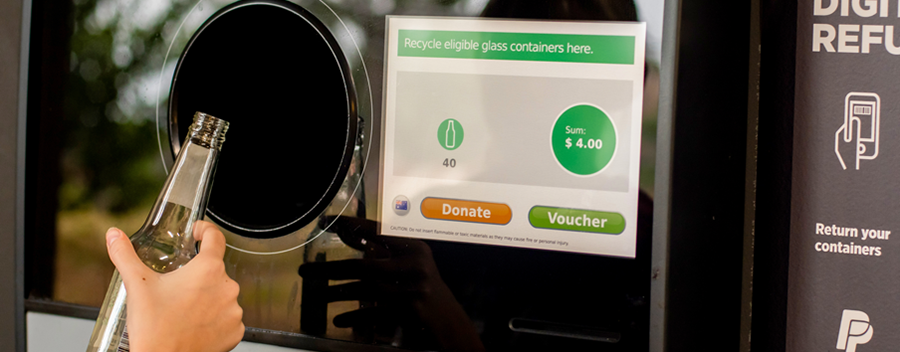
Wherever you are, the most reliable contribution is also the simplest: use your container deposit scheme. Every state and territory now has one, and the refund is the same 10 cents nationwide. If your jurisdiction is expanding its scheme – WA and the NT from mid-2026, and NSW, SA and the ACT around 2027 – it’s worth keeping an eye on which containers become eligible, because the list is about to get a lot longer in most places.
Beyond that, it pays to know your local plastics rules, especially if you organise events, run a small business, or buy supplies in bulk – what’s permitted genuinely differs from one border to the next. And on the emissions side, the single biggest lever most households control is electrification: choosing electric over gas the next time an appliance needs replacing, where that’s an option for you. Several jurisdictions offer support programs to help.
The headline, though, is an encouraging one. A few years ago this article would have had plenty of blank spaces. Today every jurisdiction has a net zero target, a container deposit scheme, and at least the beginnings of a single-use plastics regime. The pace and the detail differ – sometimes considerably – but the direction is shared.
References
Commonwealth
- AOFM Publication: Australian Government Climate Change Commitments, Policies and Programs
- Australian Government Publication: Australia’s 2035 Nationally Determined Contribution
- Clean Energy Regulator Webpage: Safeguard Mechanism
- DCCEEW Webpage: National Plastics Plan
- DCCEEW Webpage: Net Zero
- DCCEEW Webpage: Powering Australia
- DCCEEW Webpage: Reducing Emissions
- DCCEEW Webpage: Reforming Packaging Regulation
- DCCEEW Webpage: Rewiring the Nation
- DCCEEW Webpage: Safeguard Mechanism
- DCCEEW Webpage: Waste Exports
Australian Capital Territory
- ACT Government City Services Webpage: Single Use Plastics
- ACT Government Media Release: ACT Reaches Milestone Preventing New Fossil Fuel Gas Connections
- ACT Government Publication: ACT Climate Change Strategy 2019–25
- ACT Government Webpage: Container Deposit Scheme
- Climate Choices Webpage: Single-Use Plastics Ban in the ACT
- Climate Choices Webpage: Switching From Gas
- Climate Choices Webpage: What the ACT Government is Doing
- Transport Canberra Webpage: Future Planning
New South Wales
- Adapt NSW Webpage: NSW Government Action on Climate Change
- NSW Climate and Energy Action Webpage: Electricity Infrastructure Roadmap
- NSW Climate and Energy Action Webpage: The Climate Change (Net Zero Future) Act 2023
- NSW EPA Webpage: Expansion of the Return and Earn Container Deposit Scheme
- NSW EPA Webpage: Plastic Plan 2.0
- NSW EPA Webpage: Plastics Ban Exemptions Guidance
- NSW EPA Webpage: Plastics Bans and Packaged Food and Drinks
- NSW EPA Webpage: Return and Earn
- NSW Government Media Release: NSW Government Only 4% Off 2030 Emissions Target with New Net Zero Plan to Come
- NSW Government Publication: NSW Plastics Plan 2.0
- Return and Earn Webpage
Northern Territory
- DLPE Webpage: Circular Economy
- DLPE Webpage: Container Deposit Scheme
- DLPE Webpage: Greenhouse Gas Emissions Offsets Policy
- DLPE Webpage: Northern Territory Offsets Framework
- NT EPA Webpage: Container Deposit Scheme Industry Information
- NT EPA Webpage: Plastic Bag Ban
- NT Government Publication: Northern Territory Climate Resilience Plan
- NT Government Publication: Regulatory Statement: Regulation of Greenhouse Gas Emissions in the NT
- NT Government Webpage: Plastic Bag Ban
- NT Government Webpage: Single-Use Plastics Discussion Paper
Queensland
- Queensland Government Legislation: Clean Economy Jobs Act 2024
- Queensland Government Publication: Single-use Plastic Items Ban
- Queensland Government Webpage: Banned Items
- Queensland Government Webpage: Expanding the Container Refund Scheme
- Queensland Treasury Webpage: Net Zero by 2050
- The Queensland Cabinet and Ministerial Directory Webpage: Cheers! Glass Wine, Spirit Bottles to Be Part of Container Refund Scheme
- The Queensland Cabinet and Ministerial Directory Webpage: Eight Billion Containers Returned Through Refund Scheme
- The Queensland Cabinet and Ministerial Directory Webpage: Queensland Halfway to Achieving 2030 Renewable Energy Target
- The Queensland Cabinet and Ministerial Directory Webpage: Queensland to Give More Harmful Plastics the Punt
South Australia
- DEW Webpage: South Australia’s Greenhouse Gas Emissions Reporting
- EPA (SA) Webpage: Environmental Info – Container Deposit Scheme
- EPA (SA) Webpage: Environmental Info – Spirit and Wine Glass Bottles
- EPA (SA) Webpage: Single-Use Plastics
- EPA (SA) Webpage: Transition to Expand Recycling Scheme
- Replace the Waste Webpage: Guide to the Ban on Single-Use Plastic Food Containers
- SA Government Webpage: Everything You Need to Know About South Australia’s Bans on Single-Use Plastics
- SA Government Webpage: Our Electricity Supply and Market
- SAFA Publication: South Australia’s Sustainable Development Commitments
Tasmania
- DNRE Webpage: About the Phase Out
- DNRE Webpage: Recycle Rewards
- DNRE Webpage: Single-Use Plastics
- EPA Tasmania Webpage: Plastic Shopping Bags
- NRE Webpage: Recycle Rewards FAQs
- Premier of Tasmania Webpage: Tasmania Achieves Net Zero Again
- RECFIT Webpage: Fact Sheet – Tasmania’s Emissions Reduction and Resilience Roadmap 2024-29
- Tasmanian Government Webpage: One. Million. Containers
- Tasmanian Government Webpage: Recycle Rewards Celebrates 100 Million Containers Returned
Victoria
- CDS Victoria Webpage: Eligible Containers
- CDS Victoria Webpage: How to Make a Return
- CDS Victoria Webpage: Refund Point Types
- Climate Change Victoria Webpage: Victoria’s Climate Change Strategy
- DEECA Webpage: Climate Action Targets
- DEECA Webpage: Greenhouse Gas Emissions
- EPA (Vic) Webpage: Single-Use Plastics
- Recycling Victoria: Container Deposit Scheme
- Victorian Government Publication: Single-Use Plastics Ban
- Victorian Government Webpage: Victoria’s Single-Use Plastic Ban
Western Australia
- DWER Publication: Moulded Packaging from Expanded Polystyrene and Other Foamed Plastics
- Infrastructure WA Webpage: Climate Change and Sustainability
- WA Government Media Release: Pathway to Net Zero Set with Sectoral Emissions Reduction Strategy
- WA Government Media Release: Western Australia Leads the Nation on Plastics Reform
- WA Government Webpage: Container Deposit Scheme
- WA Government Webpage: Government Emissions Interim Target
- WA Government Webpage: Reducing Emissions
- WA Government Webpage: State-Owned Coal Power Stations to Be Retired By 2030 With Move Towards Renewable Energy
- WA Government Webpage: Western Australia’s Plan for Plastics