Understanding the first aid requirements for your workplace
Workplace first aid overview
All workplaces in Australia have a legal responsibility to provide adequate first aid for employees. This could include access to first aid equipment, facilities, and trained first aiders. In Australia, this obligation is covered under WHS and OHS laws; however, not all workplaces have the same requirements for compliance.
In this article we’ll look at what’s involved in workplace first aid, the qualifications for first aiders, and the requirements and procedures as they vary across industries and workplaces.
What is involved with workplace first aid?
There are many procedures that workplaces in Australia can undertake to help their compliance with the law. One of these is having trained first aiders in the workplace.
To be trained as a first aider in Australia, you must hold a nationally recognised statement of attainment from a registered training organisation (RTO) and regularly attend training to keep knowledge up to date.
The standard and minimum qualification for most workplaces is HLTAID011 Provide First Aid which is typically a one-day course that provides the skills and knowledge to recognise and respond to a variety of illness and injuries, this includes performing CPR and the use of an automated external defibrillator.
Although the HLTAID011 Provide First Aid certificate is valid for three years, the CPR component must be renewed every 12 months (which can normally be done in ~ 1 hour through the HTLAID009 certificate).
When enrolling into a first aid course, it is important that the provider is registered with ASQA or a state regulator. Approved RTOs can be found at training.gov.au, along with details of each course/certificate as well.

How does first aid vary for industry/workplaces?
While the standard HTLAID011 certificate is useful beyond low-risk workplaces, some workplaces may require additional certification if the industry involves more complex environments.
Likewise, high-risk workplaces may need to implement more rigorous procedures and provide access to certain equipment in order to meet their first aid requirements.
Additional first aid training for high-risk workplaces
Additional first aid training may be required when the workplace:
- is remote or isolated
- has risks from dangerous substances (e.g. cyanide or arsenic)
- requires specialist first aid equipment (e.g. Oxygen Resuscitation Kits or spine boards)
- involves children
- contains psychological risks
- has workers with existing medical conditions.
If this applies, the additional first aid training can include certificates such as:
- HTLAID012, which may be required for childcare compliance
- HTLAID013, which covers remote or isolated worksites where medical assistance might be delayed
- HTLAID014, covering advanced first aid that may be required in industries like mining and construction.
Additional first aid procedures for high-risk workplaces
Beyond the necessary qualifications, some environments also require certain ratios of first aiders to workers.
Safe Work Australia advise having one first aider for every:
- 50 workers in low-risk workplaces (e.g. an office or retail business)
- 25 workers in high-risk workplaces (e.g. a construction site)
- 10 workers in remote high-risk workplaces (e.g. a mine).
Safe Work Australia also recommends having a first aid room in low-risk workplaces with 200 or more workers and in high-risk workplaces with 100 or more workers.
The size and location of the workplace could also matter, as well as the people that enter the workplace (e.g. workers, contractors, volunteers, visitors).
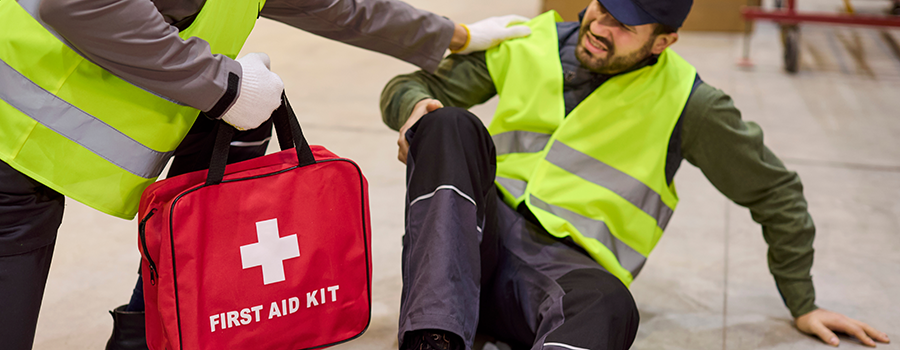
Applying effective first aid to the workplace
While the numbers above are a useful guide, it is important to note that they are not universal law.
A helpful way to determine your workplaces particular first aid needs is through a risk assessment. Safe Work Australia has included a sample risk assessment in their Model Code of Practice – First aid in the workplace. A risk assessment can help determine first aider ratios, the nature of the hazards in the workplace, preventing incidents, and whether additional equipment or first aid rooms may be required.
It is important that first aid is easy to access. This could include clear labelling of who the qualified first aiders are, where to find them or how to contact them (as well as other emergency numbers), and where the first aid kits or specialist equipment are located.
Beyond this, first aid procedures could include processes for reporting injuries and illnesses in the workplace, processes to ensure emergency services can access the unwell person as quickly as possible, and infection control processes.
Some states have compliance codes specific to first aid in the workplace which although not mandatory can be a useful tool to help with legal compliance.
For example Victoria has the WorkSafe compliance code, and other states and territories have their own codes of practice that are based on the national Model Code of Practice.

Applying first aid to those working from home
WHS and OHS obligations still apply when workers are working from home. In states and territories where WHS applies, PCBUs must address emergency plans and ensure that workers have access to first aid or ways to get help if needed (e.g. ability to access a phone). Likewise, in Victoria, employers have OHS obligations to control risks, identify hazards and ensure employees have access to first aid.
It may be useful to develop a risk control plan to identify potential hazards and risks that can exist in the home. Checklists, surveys, or workstation assessments for workers can also help employers and employees identify potential hazards while working from home.
Safe Work Australia has an information sheet that provides further information and practical guidance on managing WHS risks for employees working from home.

Keeping compliant with your first aid requirements
Regularly reviewing first aid arrangements is important to ensure that they are satisfactory and effective. Employers should review first aid requirements when:
- the number of employees changes
- work practices are introduced or changed
- an incident requiring first aid has occurred
- new information is released about previously unidentified hazards or measures (for example, new considerations in Victoria with the Psychological Health Regulations).
Summaries of WHS and OHS legislation, including general first aid duties and emergency procedures are available in our online safety directory, SafetyLaw. If you’re subscribed to SafetyLaw you will be notified of any updated summaries through our updates email service.
If you don’t have an Environment Essentials subscription but want to stay in touch with the progress of workplace health and safety laws, then sign up for a free trial or contact us on (03) 9095 6533.
References
- Australian Government Webpage: National Training Register
- Safe Work Australia Publication: Model Code of Practice: First aid in the workplace
- Safe Work Australia Publication: Working From Home / PCBU Information Sheet
- Safe Work Australia Webpage: First Aid
- SafeWork NSW Webpage: First Aid in the Workplace
- WorkSafe Victoria Publication: Compliance Code: First Aid in the Workplace
- WorkSafe Victoria Webpage: Controlling Hazards and Risks in the Workplace
- WorkSafe Victoria Webpage: Working from Home